
 Other versions by this Author
In recent decades, scholars have come to recognize the importance of classical Islamic philosophy both in its own right and in its preservation of and engagement with Western philosophical ideas. At the same time, the period immediately following the so-called classical period has often been seen as a sort of dark age, in which Islamic thought entered a long period of decline. In this monumental new work, Frank Griffel seeks to overturn this conventional wisdom, arguing that what he calls the "post-classical" period has been unjustly maligned and neglected by previous generations of scholars.
The Formation of Post-Classical Philosophy in Islam is a comprehensive study of the far-reaching changes that led to a re-shaping of the philosophical discourse in Islam during the twelfth century. Earlier Western scholars thought that Islam's engagement with the tradition of Greek philosophy ended during that century. More recent analyses suggest that Islamic thinkers instead integrated Greek thought into the genre of rationalist Muslim theology (kalam). Griffel argues that even this view misses a key point. In addition to the integration of Greek ideas into kalam, Muslim theologians picked up the discourse of philosophy in Islam (falsafa) and began to produce books on philosophy. Books in these two genres, kalam and philosophy, argue for opposing teachings on the nature of God, the world's creation, and on the afterlife-even when written by the same authors. Griffel explains the emergence of a new genre of philosophical books called "hikma," works that stand opposed to Islamic theology and at the same wish to complement it. Offering a detailed history of philosophy in Iraq, Iran, and Central Asia during the twelfth century, together with an analysis of the way philosophy was practiced during this time, Griffel shows how works of falsafa, written by major Muslim theologians such as al-Ghazali developed step-by-step into critical assessments of philosophy that try to improve philosophical teachings, and eventually become fully fledged philosophical summas in the work of Fakhr al-Din al-Razi. Griffel's examination of the different methods of kalam and hikma demonstrate both the coherence and ambiguity of a Muslim post-classical philosopher's oeuvre.
A work of extraordinary breadth and depth, The Formation of Post-Classical Philosophy in Islam will be essential reading for anyone interested in the history of Philosophy or the history of Islam.
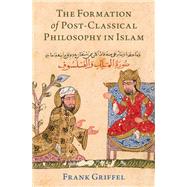
The Formation of Post-Classical Philosophy in Islam
by Griffel, FrankFormat: Hardcover
Pub. Date: 2021-07-01
Publisher(s): Oxford University Press
List Price: $181.33
Buy New
Usually Ships in 5-7 Business Days
$181.15
Rent Textbook
Select for Price
Digital
$106.79*
Used Textbook
We're Sorry
Sold Out
How Marketplace Works:
- This item is offered by an independent seller and not shipped from our warehouse
- Item details like edition and cover design may differ from our description; see seller's comments before ordering.
- Sellers much confirm and ship within two business days; otherwise, the order will be cancelled and refunded.
- Marketplace purchases cannot be returned to eCampus.com. Contact the seller directly for inquiries; if no response within two days, contact customer service.
- Additional shipping costs apply to Marketplace purchases. Review shipping costs at checkout.
Summary
Author Biography
Frank Griffel is a Professor of Islamic Studies and International and Area Studies at the Department of Religious Studies at Yale University. He is a Carnegie Scholar and a Whitney Fellow among others. He is author of Al-Ghazali's Philosophical Theology.
Table of Contents
Introduction
Part One: Post-Classical Philosophy In Its Islamic Context
First Chapter: Khorasan, the Birthplace of Post-Classical Philosophy: A Country in Decline?
The madrasa System
The Cities of Khorasan and Its Surrounding Provinces
The First Half of the Sixth/Twelfth Century: Seljuq Rule
The Second Half of the Sixth/Twelfth Century: Khwrazmshahs and Ghurids
Other Patrons: Qarakhanids, the Caliphal Court in Baghdad, and the Ayyubids in Syria
Second Chapter: The Death of as a Self-Description of Philosophy
Falsafa as a Quasi-Religious Movement Established by Uncritical Emulation (taqlid)
Falsafa As Part of the History of the World's Religions
Three Different Concepts of Philosophy in Islam
Hikma as the New Technical Term For
Third Chapter: Philosophy and the Power of the Religious Law
The Legal Background of al-Ghazali fatwa on the Last Page of His Tahfut al-falsifa
Persecution of Philosophers in the Sixth/Twelfth century
'Ayn al-Qudat's Execution 525/1131 in Hamadan
Shihbab al-Din Yahya al-Suhrawardi's Execution 587/1191 in Aleppo
Was al-Ghazali's fatwa? Ever Applied?
Part Two: Philosophers and Philosophies DS A Biographical History of Philosophy in the Sixth/Twelfth Century Islamic East
The Principal Sources for Sixth/Twelfth Century History of Philosophy in the Islamic East
The Early Sixth/Twelfth Century: Avicennism Undisturbed
Avicennism Contested: The Early Decades of the Sixth/Twelfth Century
The Outsider as Innovator: Abu l-Barakat al-Baghdadi (d. c. 560/1165)
Two Ghazalians of Transoxania: al-Mas' udi and Ibn Ghaylan al-Balkhi (d. c. 585/1190)
Majd al-Din al-Jili - Teacher of Two Influential Philosophers Trained In Maragha
Al-Suhrawardi (d. c. 587/1192), the Founder of the "School of Illumination"
Fakhr al-Din al-Razi (d. 606/1210) - Post-Classical Philosophy Fully Developed
Part Three: The Formation of ?ikma As a New Philosophical Genre
First Chapter: Books and Their Teachings
Al-Razi's "Philosophical Books" (kutub hikmiyya)
What Books of hikma Do: Reporting Avicenna
First Perspective: Teachings on Epistemology
What Books in hikma Also Do: Doubting and Critizising Avicenna
Knowledge as Relation: The Starting Point in al-Ghazali
Knowledge as Relation: Abu l-Barakat al-Baghdadi's Key Contribution
Knowledge as Relation: Developments in the Second Half
of the Sixth/Twelfth Century
Second Perspective: Teachings on Ontology and Theology
A New Place for the Study of Metaphysics Within Philosophy
Opposing Avicenna: God's Essence is Distinct From His Existence
What Books of ?ikma Mostly Do: Endorsing and Correcting
Avicennan Philosophy
Second Chapter: Books and Their Genre
The Eclectic Career of al-Ghazali's Doctrines of the Philosophers
(Maqasid al-falasifa)
Al-Ghazali as Clandestine faylasuf- Evaluating His Madnun Corpus
The Madnun-Corpus and Forgery-Two Pseudo-Epigraphies Attached to al-Ghazali
Between Neutral Report and Committed Investment: al-Mas 'udi's Commentary
on Avicenna's Glistering Homily (al-Khutba al-gharra)
Post-classical Philosophy and Tolerance For Ambiguity
Third Chapter: Books and Their Method
Dialectical Reasoning Replaces Demonstration: "Careful Consideration" (i'tibar)
in Abu l-Barakat al-Baghdadi
The Middle Way Between Avicennism and Ghazalism: How
Fakhr al-Din al-Razi Describes His Philosophy
Fakhr al-Din al-Razi's Method of "Probing and Dividing" (sabr wa-taqsim)
A Case Study of the New Method: Al-Razi on God's Knowledge of Particulars
The Method in Books of hikma: Implementing the Principle of Sufficient Reason
The Method in Books of kalam: Limiting the Principle of Sufficient Reason
Conclusions
Bibliography
Appendices
An electronic version of this book is available through VitalSource.
This book is viewable on PC, Mac, iPhone, iPad, iPod Touch, and most smartphones.
By purchasing, you will be able to view this book online, as well as download it, for the chosen number of days.
Digital License
You are licensing a digital product for a set duration. Durations are set forth in the product description, with "Lifetime" typically meaning five (5) years of online access and permanent download to a supported device. All licenses are non-transferable.
More details can be found here.
A downloadable version of this book is available through the eCampus Reader or compatible Adobe readers.
Applications are available on iOS, Android, PC, Mac, and Windows Mobile platforms.
Please view the compatibility matrix prior to purchase.